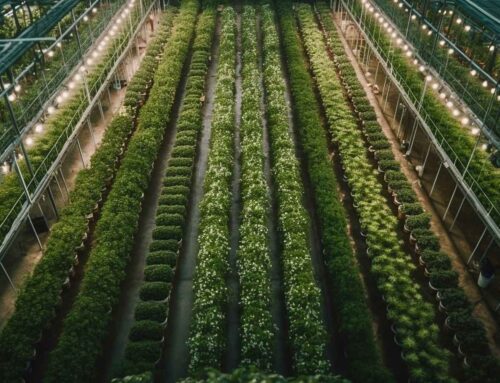
Multi-crop farming is increasingly popular as it enhances productivity and maintains soil health while avoiding market risks associated with monoculture. However, the complexity of managing a multi-crop farm has its challenges, especially in managing water efficiently across diverse crops. Traditional irrigation systems typically apply water uniformly across the field without considering the specific water needs of different crops. On a multi-crop farm, traditional irrigation results in overwatering some crops and underwatering others, leading to reduced yields, wasted resources, and soil degradation.
Smart irrigation is quickly becoming the new norm, enabling sustainable and profitable outcomes for multi-crop operations.
Smart irrigation systems combine real-time field data collection with automated water control technologies. Utilizing Internet of Things (IoT) devices such as soil moisture sensors, weather stations, and flow meters, smart irrigation assesses current field conditions and adjusts watering schedules to maximize crop yields. Real-time data enables effective site management, real-time alerts, messages, and reporting for strategic on-farm decision-making.
Artificial intelligence (AI) technology is poised to revolutionize farm management. Global AgriTech Solutions’ dashboard software uses AI algorithms to predict irrigation needs based on historical data, weather forecasts, crop type, and soil composition. We help farmers ensure that each crop receives the precise amount of water it needs, reducing waste while increasing per-acre productivity.
One of the biggest advantages of smart irrigation in multi-crop farming is its ability to segment fields into zones. Each zone is managed independently, with customized irrigation schedules tailored to the specific water demands of the crops planted there. A farmer growing tomatoes, cucumbers, and herbs in adjacent plots can set different moisture thresholds and watering frequencies for each crop. With our dashboard software, a single farm can manage hundreds of zones with their own irrigation parameters and data ingestion.
It is a no-brainer to integrate with fertigation into smart irrigation systems—delivering fertilizer through irrigation water with real-time insights into soil nutrition. This dual-functionality ensures crops receive the right amount of nutrients alongside water, enhancing growth while reducing fertilizer runoff by distributing the correct amount of water directly to crop roots. Nutrient delivery can then be customized and automated by crop type and growth stage, minimizing the impact of fertilizer on soil health.
Cost-Benefit Analysis and ROI
While the upfront cost of installing a smart irrigation system can be substantial, the long-term benefits outweigh the investment. Farmers quickly realize significant savings in water, fertilizer, and labor costs. Improved crop yields and product quality contribute further to profitability.
Beyond the economic advantages, smart irrigation contributes to sustainable water management. It conserves water resources, reduces energy consumption, and prevents soil salinization and erosion.
Farmers throughout North America have successfully adopted smart irrigation in multi-crop farming. In one case, a Canadian farm growing berries, lettuce, and squash reported a 30% increase in yield and a 40% reduction in water usage after implementing a zone-based smart irrigation system.
Multi-crop farming holds immense potential for enhancing food security and ecological balance, but it also demands precise resource management. Smart irrigation is a powerful enabler, offering farmers the tools to tailor water and nutrient delivery to each crop’s unique needs. By investing in smart irrigation systems, farmers can increase productivity, reduce environmental impact, and build more resilient agricultural operations.
Global AgriTech Solutions offers cutting-edge smart irrigation technologies specifically designed for multi-crop environments. With a focus on data-driven decision-making and sustainability, we help farmers thrive in an era of climate uncertainty and resource scarcity. Smart Irrigation